
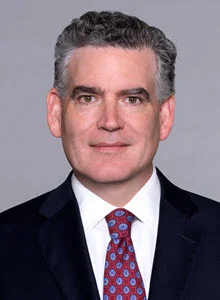
- Posts by Mark A. Hiller
 Attorney
Mark Hiller is a commercial litigator. He helps clients navigate their complex disputes at all stages, from pre-litigation through appeals. He has represented clients in high-stakes disputes in a range of industries, including ...
Those who follow class action law probably will be familiar with In re Trulia (2016), the seminal decision of the Delaware Court of Chancery that put the brakes on disclosure-only settlements. Before Trulia, these controversial settlements were ubiquitous in deal litigation, in which shareholders of a company file a class action lawsuit seeking to stop the company from engaging in a merger or acquisition on the ground the company failed to disclose sufficient information about the transaction. Under a typical disclosure-only settlement, the company agrees to supplement its ...
In this post we talk about two of our favorite things (relatively speaking): class actions and mootness. We last looked at these issues when covering the U.S. Supreme Court’s decision in Campbell-Ewald Company v. Gomez, 136 S. Ct. 663 (2016). There, the Court rejected the defendant’s attempt to “pick off” the named plaintiff in a class action case. The defendant had made a Rule 68 offer to settle the case for the full value of the plaintiff’s claim. The plaintiff declined, but the defendant argued that its offer nonetheless mooted the claim. The Supreme Court rejected that ...
Last November we previewed a case raising an important question in the class action world: If a defendant in a putative class action offers the named plaintiff complete relief on the plaintiff’s individual claim, but the plaintiff does not accept the offer, does the offer nonetheless render the case moot? On January 20, the Supreme Court answered “no,” but left open the possibility of a different result if the defendant actually deposits the amount of the plaintiff’s claim in an account payable to the plaintiff. The case is Campbell-Ewald Co. v. Gomez.
The case began when the ...
On Monday, the Supreme Court held in DIRECTV, Inc. v. Imburgia that a California appellate court erred by declining to enforce an arbitration agreement that prohibits arbitration on a class-wide basis. The decision is the latest in a steady line from the Supreme Court chastising lower courts for failing to give effect to arbitration agreements. Perhaps most interesting, the opinion is written by Justice Breyer, who recently authored a dissent arguing that the Supreme Court has expanded the Federal Arbitration Act (FAA) too far. In the Imburgia opinion, Justice Breyer acknowledges ...
The Supreme Court began its new Term on October 5, and already the Court is slated to hear several cases that could have major impacts on class-action litigation. Among the issues facing the Court are:
▪ whether a defendant can render a putative class action moot by offering the named plaintiff all the relief the plaintiff could recover individually if the plaintiff were to prevail, even if the plaintiff rejects the offer (Campbell-Ewald Company v. Gomez);
▪ whether a plaintiff has standing to bring a claim (including a class claim) where the plaintiff’s statutory rights were ...
Can a class action settlement agreement contain a fee-shifting provision that provides for a payment of attorneys’ fees? In a question of first impression, the North Carolina Court of Appeals said yes, subject to a trial court’s approval of the settlement at a fairness hearing.
In the long-running Ehrenhaus v. Baker case, the Plaintiff brought a class action challenging the merger of Wells Fargo and Wachovia. The parties ultimately entered into a settlement agreement that also provided for a payment of attorneys’ fees to Plaintiff’s counsel. The trial court approved the ...
About Class Actions Brief Blog
Class Actions Brief is your source for analysis of class action developments in federal and state judicial systems nationwide. Our attorneys use their experience representing clients both in and against class actions to provide fresh takes and commentary on what is happening in our courts today.

Topics
- Antitrust
- Appeals
- Arbitration
- Bankruptcy
- Choice of Law
- Class Action Fairness Act (CAFA)
- Class Counsel/Attorney's Fees
- Class Definition
- Class Representatives
- Collective Action
- Commonality/Predominance
- Consumer Protection
- Damages
- Data Privacy
- Discovery
- Due Process
- Employment
- Expert
- Jurisdictional Issues
- Manageability
- Mergers & Acquisitions
- Recent Filings
- Securities
- Settlement
- Standing
- Standing/Mootness
- Statute of Limitations
- Tolling
Jurisdictions
- All Jurisdictions
- D.C. Circuit
- District of South Carolina
- Eastern District of North Carolina
- Fifth Circuit
- Fourth Circuit
- Legislation
- Middle District of North Carolina
- Ninth Circuit
- North Carolina Business Court
- North Carolina State Courts
- North Carolina Supreme Court
- Northern District of Georgia
- Other
- Seventh Circuit
- Sixth Circuit
- South Carolina State Courts
- Tenth Circuit
- Third Circuit
- U.S. Supreme Court
- Western District of North Carolina
